What Jefferson County Deserves to Know About Data Centers — And Why Transparency Can’t Wait


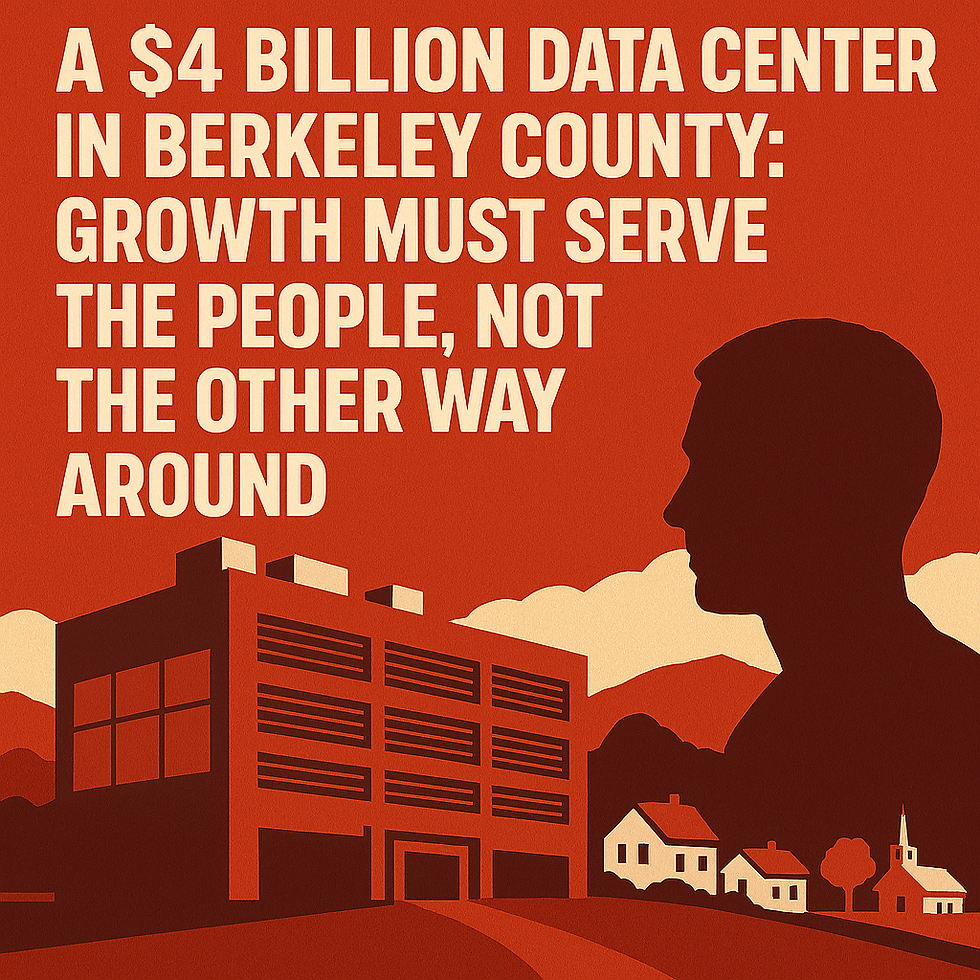
For months now, West Virginians have heard big headlines about data centers — especially the data center project announced in Berkeley County.
But here in Jefferson County, where multiple data center proposals are already in the pipeline, residents have been kept in the dark. Not because local leaders don’t care, but because state law allows these projects to move forward without public disclosure.
That’s not how government should work. Not in Jefferson County. Not in West Virginia. Not anywhere.
What We Know — Even When the State Won’t Say It Out Loud
Jefferson County officials have acknowledged that several data center proposals have been submitted or discussed with the Jefferson County Development Authority. But under the state’s “High‑Impact Development Project” law, companies can apply for approval without ever being named publicly.
That means:
Residents don’t know who is proposing these projects
We don’t know how many proposals exist
We don’t know where they would be built
And we don’t know what the long‑term impact would be on our grid, water, land use, or taxes
This is not transparency. This is not accountability. And it is not how you build trust with the people who live here.
A Rumored Visit Raises Even More Questions
Now, in the middle of all this secrecy, there is widespread talk that Governor Patrick Morrisey is expected to visit Jefferson County next week to make an announcement — possibly at the Jefferson Speedway or near the Rockwool site.
No agenda has been released. No project has been disclosed. No community briefing has been offered.
If this visit is connected to data center development — and many residents believe it is — then it raises an even bigger concern:
Why is the Governor preparing to make an announcement in Jefferson County before Jefferson County residents have been given any information at all?
This is exactly the problem with the current system. High‑impact projects can be negotiated behind closed doors, announced with fanfare, and approved before the community ever sees the details.
Jefferson County deserves better than surprise announcements and secrecy. We deserve transparency, public hearings, and honest conversation before decisions are made — not after the ribbon‑cutting.
Why Jefferson County Is a Target
Let’s be honest: Jefferson County is prime real estate for data center expansion. We sit next to the largest concentration of data centers on Earth — Northern Virginia’s Data Center Alley. We have transmission lines, industrial‑zoned land, and a state government eager to approve projects quickly.
That combination makes Jefferson County one of the most likely places for large‑scale development. But the public has been given zero information.
The Tax Problem: Jefferson County Bears the Impact, Charleston Takes the Revenue
Even worse, under current state law, the majority of tax revenue from these high‑impact projects goes to the state — not to Jefferson County.
Jefferson County would absorb:
The land use
The noise
The energy demand
The water impact
The emergency‑services burden
The long‑term infrastructure strain
But we would receive only a minimal share of the tax revenue, while Charleston collects the bulk of the benefit.
That means:
Our schools don’t see the funding boost
Our first responders don’t get the resources
Our roads don’t get the upgrades
Our taxpayers carry the risk while the state pockets the reward
Jefferson County should not be treated as a sacrifice zone for state‑level revenue. If we carry the impact, we deserve the benefit.
The Microgrid Law Makes It Worse
The state’s Certified Microgrid Development Program allows:
Up to two statewide microgrid districts
Each district can host multiple data centers
And the application process is shielded from FOIA until after approval
More than 900 West Virginians submitted public comments — and still, the public has no idea which counties are being considered.
This Isn’t Anti‑Development — It’s Pro‑Democracy
Data centers can bring jobs and opportunity. But they also bring:
Enormous energy demand
Water usage
Noise
Land‑use changes
Long‑term infrastructure costs
And under current law, Jefferson County gets the impact without the revenue.
Communities must be part of the decision‑making process. Not after the deal is done — before it begins.
My Commitment to Jefferson County
If elected to the House of Delegates, I will introduce legislation to:
End confidentiality for high‑impact development projects
Require public disclosure of all data center proposals
Mandate community impact assessments
Protect local control
Ensure that development benefits workers and families
Fix the tax structure so Jefferson County keeps its fair share No more sending the revenue to Charleston while our schools and services go underfunded.
Jefferson County is a place where neighbors look out for each other. Where we solve problems together. Where transparency isn’t optional — it’s expected.
It’s time to bring that spirit back to Charleston.
Results, Not Rhetoric. Transparency, Not Secrecy. Leadership, Not Backroom Deals.
— Rob Vincent Candidate for House of Delegates, District 99


Comments